3 hours ago
21
 article
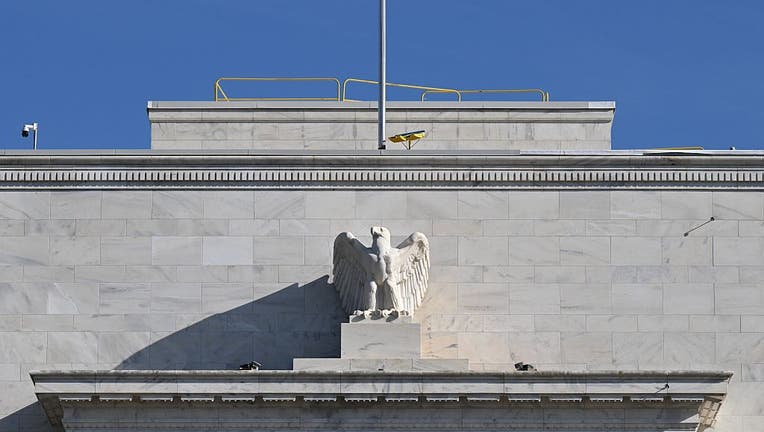
Photo taken on Sept. 16, 2026 shows the U.S. Federal Reserve building in Washington, D.C., the United States. (Photo by Li Rui/Xinhua via Getty Images)
WASHINGTON - The Federal Reserve left its key interest rate unchanged at about 3.9% Wednesday as inflation remained elevated, offering few clues about its next move.
What they're saying:
"Inflation remains elevated," the Fed said in a statement released after its two-day policy meeting. Holding off on an increase will allow "the accumulation of more information" that will help determine what policy the Fed should pursue "to ensure a timely return of inflation" to the central bank’s 2% inflation target, the statement said.
RELATED: Social Security chief Bisignano says program will 'be around for another 90 years'
The backstory:
The Fed, led by Chairman Kevin Warsh, raised its benchmark rate last month for the first time in three years, defying President Donald Trump’s demands for rate cuts, in an effort to get inflation back to its 2% target in a "timelier" manner. The Fed is tasked by Congress to combat inflation, and it does so by lifting rates to slow borrowing and spending and cool price increases.
The statement leaves the Fed’s next moves unclear, even though officials last month penciled in another rate hike for this year. Wall Street investors have also priced in a rate hike in December, according to futures markets. Whether the Fed is still leaning toward another hike will likely be a key issue in the news conference held by Fed Chairman Kevin Warsh this afternoon.
Two Fed officials dissented from Wednesday’s decision, with Fed governor Lisa Cook and Federal Reserve Bank of Cleveland President Beth Hammack voting in favor of hiking rates by a quarter point. Cook has been targeted by the Trump administration, which tried to fire her last year, though the Supreme Court in June ruled she could keep her job while litigation played out. No president has fired a Fed governor before, a sign of the Fed’s longstanding independence from day-to-day politics. Trump renewed his attempt to remove Cook last month by setting up a committee to look into allegations Cook committed mortgage fraud, which she has denied.
By the numbers:
Inflation picked up in September, when consumer prices rose 3.7% compared with a year earlier. The increase was much bigger than the 2.4% rate in February, just before the Iran war.
And on a monthly basis, the consumer price index — the most widely followed inflation gauge — rose 0.3% in both August and September. At that pace over a full year, inflation would rise much more quickly than the Fed's 2% target.
A separate inflation measure more closely followed by the Fed, the personal consumption expenditures price index, comes out Thursday and is forecast to have jumped 3.6% in September from a year earlier, up from 3.4% in August. Core prices, which exclude the food and energy categories, are forecast to have risen 3.1%, up from 3% the previous month.
RELATED: IRS launches mobile app for refund tracking and payments as agency targets fraud
What's next:
On Thursday, a separate inflation measure more closely followed by the Fed, the personal consumption expenditures price index, is forecast to have jumped 3.6% in September from a year earlier, up from 3.4% in August. Core prices, which exclude the food and energy categories, are forecast to have risen 3.1%, up from 3% the previous month.
Big picture view:
The Fed's policy meeting is part of a busy week for central banks around the world. The Bank of Canada will also meet Wednesday and is forecast to lift its key rate a quarter point, to 2.5%. Policymakers at the European Central Bank and the Bank of Japan are both scheduled to meet Thursday and are expected to keep their key rates unchanged.
For Warsh and the Fed, another key consideration is that the U.S. economy is growing at a healthy pace and unemployment remains low, at 4.2%, even if hiring is also sluggish. The government will report Thursday on growth for the July-September quarter, which is expected to reach 3%, according to a forecast by data provider FactSet. That would be up from 2.2% in the April-June quarter.
Many economists argue that solid growth is evidence that interest rates aren't particularly high and the economy could withstand higher rates to combat inflation.
The Source: The Associated Press contributed to this report. The story is based on the Federal Reserve’s statement following its two-day policy meeting. This story was reported from Los Angeles.
Consumer